Norfolk · Norfolk
Fossil hunting at West Runton
The Cromer Forest-bed coast, where the West Runton Mammoth was found. Ice Age mammal material and flint fossils.
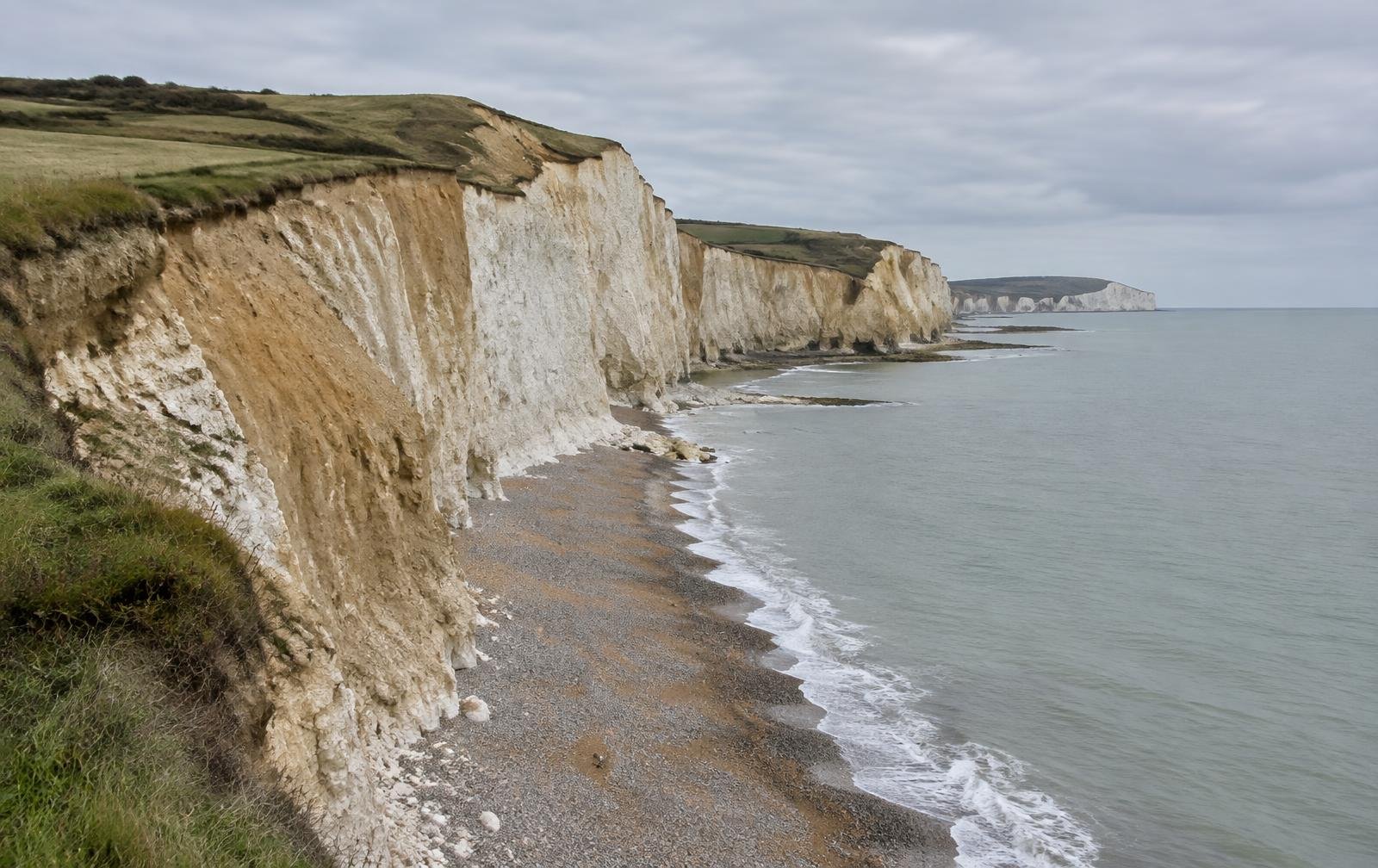
Representative photography of this stretch of coast, not a photograph of the site on a particular day.
What can you find?
- Mammal bonesIce Age and Pleistocene mammal remains from eroding cliffs and forest beds.Identify →
- Sea urchinsEchinoids preserved in chalk and limestone, from dome-shaped to heart-shaped.Identify →
- BivalvesFossil shellfish with two matching valves, common on most marine sites.Identify →
- Fossilised woodDriftwood and tree remains replaced by minerals, sometimes as jet or lignite.Identify →
About the site
West Runton is where the most complete mammoth skeleton found in Britain was excavated from the Cromer Forest-bed in the 1990s. The same Pleistocene deposits are exposed at low tide in the foreshore and at the base of the cliffs, and produce bone, teeth and freshwater shells.
Flint echinoids and sponges from the chalk also occur in the beach shingle, so there is something to find whatever the state of the Forest-bed.
Important vertebrate finds here have real scientific value. Norfolk Museums Service actively records material, and anything substantial should be reported rather than removed.
Planning a visit
- Geological period
- Pleistocene (Cromer Forest-bed Formation), around 700,000 years old, with Cretaceous flint in the shingle
- Difficulty
- Moderate
- Suitable for children
- Yes, with supervision and attention to the tide and cliffs.
- Best time to go
- Low tide after winter storms, when sand has been stripped from the foreshore.
- Tides
- The Forest-bed is exposed only at low tide and often buried by sand. Time the visit for low water and accept that conditions vary.
- Access
- Beach ramp at West Runton gap gives reasonable access to the sand.
- Parking
- Car park at West Runton beach.
- Walking and terrain
- Short walk from the car park to the foreshore.
- Location type
- Beach, Cliff, Geological site
- Collecting
- The site is an SSSI. Do not dig the Forest-bed. Report bone and tooth finds to Norfolk Museums Service, who maintain a record of material from this coast.
Safety
- Cliff falls are common along this coast.
- The foreshore is slippery and tides cover it quickly.
What to bring
- Wellies
- Tide table
- Camera
- Bag