Norfolk · Norfolk
Fossil hunting at Hunstanton
Striped red and white chalk cliffs on the Wash, with belemnites, sponges and brachiopods.
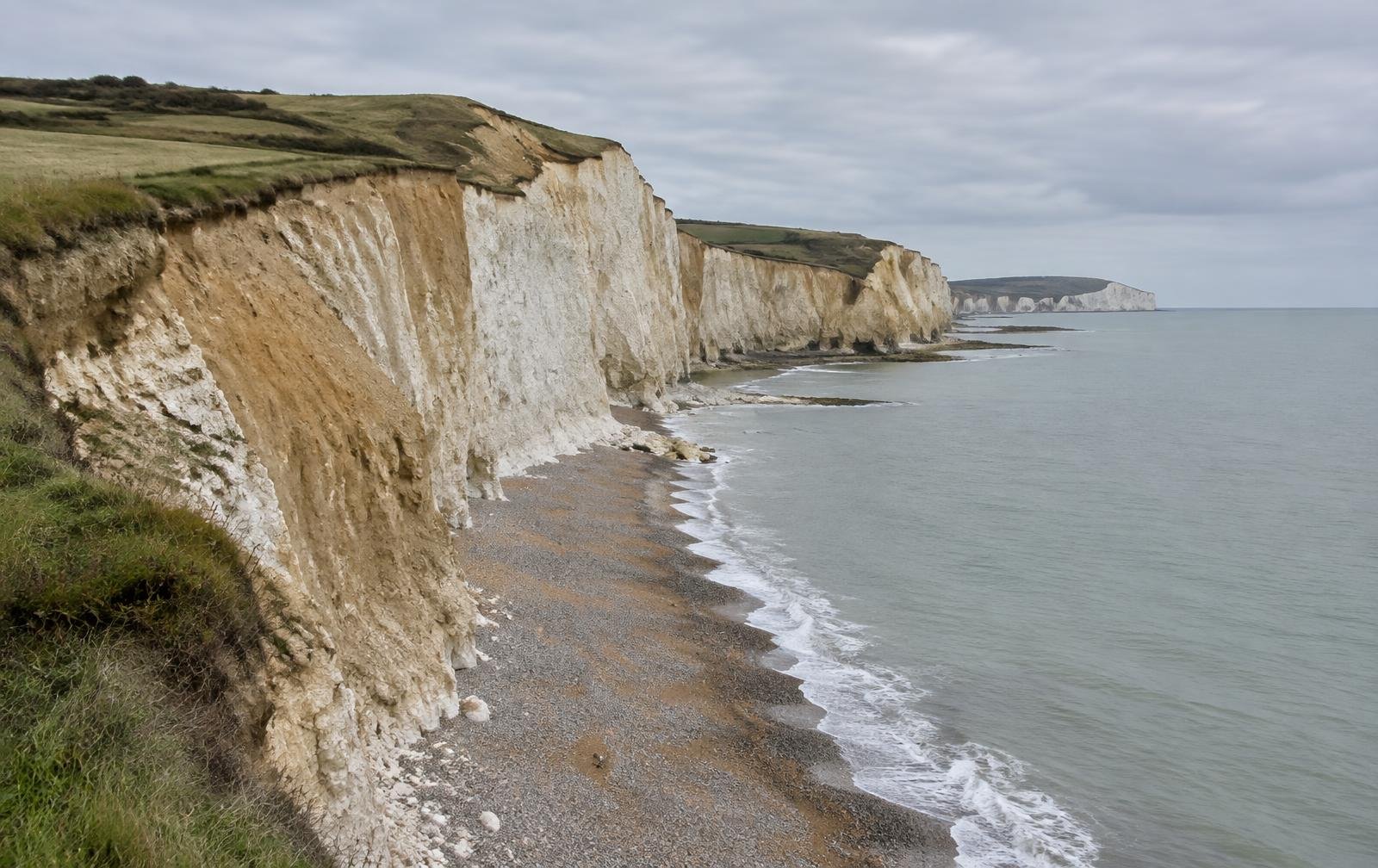
Representative photography of this stretch of coast, not a photograph of the site on a particular day.
What can you find?
- BelemnitesBullet-shaped internal guards of squid-like Jurassic and Cretaceous animals.Identify →
- BrachiopodsTwo-shelled marine animals, abundant in limestone and chalk.Identify →
- BivalvesFossil shellfish with two matching valves, common on most marine sites.Identify →
- Sea urchinsEchinoids preserved in chalk and limestone, from dome-shaped to heart-shaped.Identify →
- AmmonitesCoiled shells of extinct marine molluscs, the classic British fossil.Identify →
About the site
Hunstanton's cliffs are unmistakable: white chalk over a band of red limestone over brown carstone. The Red Chalk contains belemnites, brachiopods and bivalves, and flint and chalk from the upper cliff yields sponges and echinoids.
The wide, flat beach and the town's facilities make it a comfortable family destination, and finds can be made simply by walking the shingle below the cliffs at low tide.
Planning a visit
- Geological period
- Early to Late Cretaceous (Carstone, Hunstanton Red Chalk and Ferriby Chalk), around 110–95 million years old
- Difficulty
- Easy
- Suitable for children
- Yes, with supervision and attention to the tide and cliffs.
- Best time to go
- Low tide; winter after storms for the freshest material.
- Tides
- The beach below the cliffs is wide at low water and much reduced at high tide.
- Access
- Level promenade with ramps; the beach is sand and shingle and relatively easy going.
- Parking
- Large pay and display car parks on the Hunstanton seafront.
- Walking and terrain
- A few minutes from the promenade to the cliff base.
- Location type
- Beach, Cliff
- Collecting
- Collect loose material from the beach. Hammering the cliffs is neither safe nor permitted.
Safety
- Rockfall from the chalk is frequent — do not sit or shelter beneath the cliffs.
- The Wash tides come in over flat sand; keep an eye on the water.
What to bring
- Boots or wellies
- Bag
- Hand lens