Somerset · Somerset
Fossil hunting at Watchet
Triassic and Lower Jurassic cliffs and ledges east and west of the harbour town.
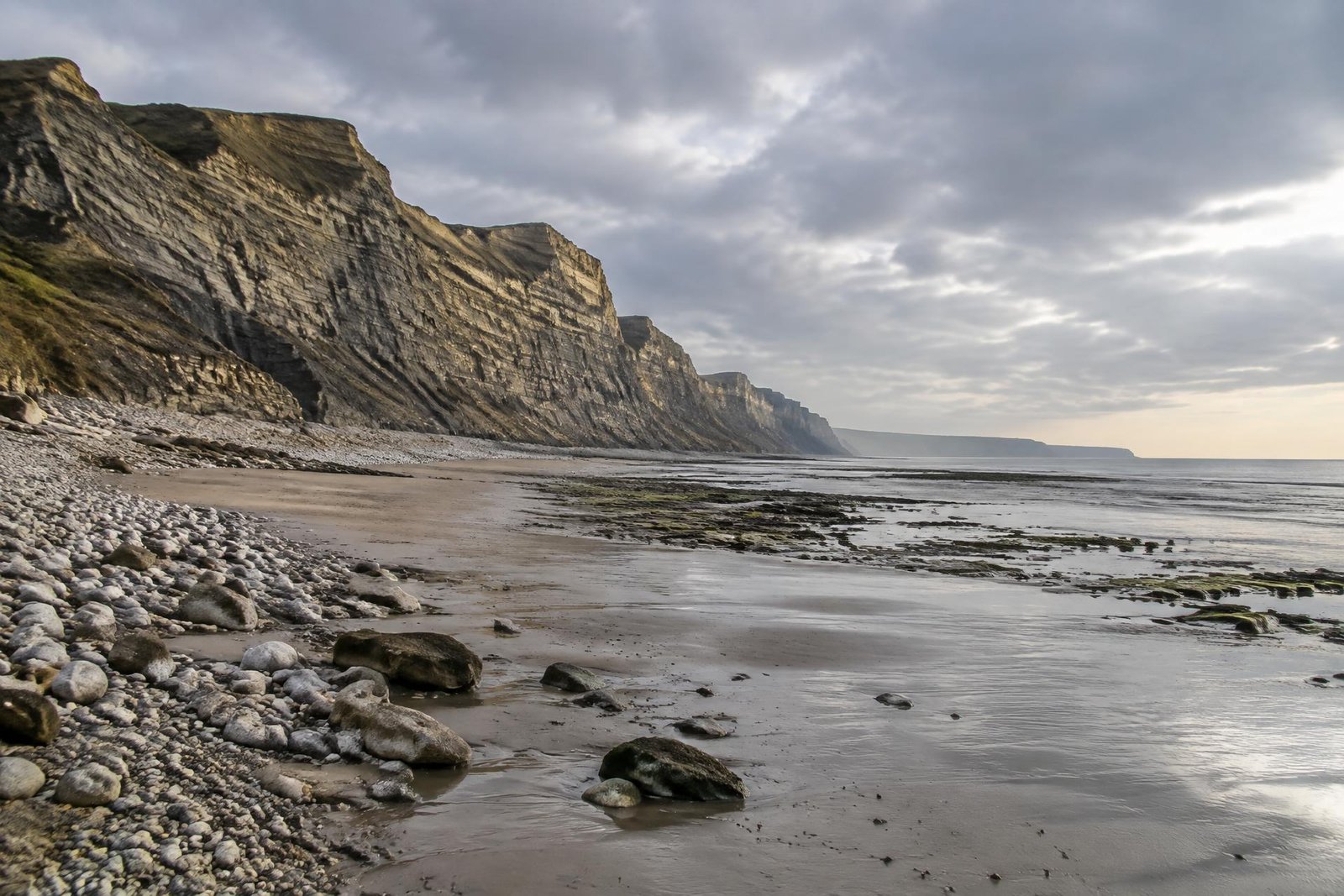
Representative photography of this stretch of coast, not a photograph of the site on a particular day.
What can you find?
About the site
The coast around Watchet exposes the transition from Triassic red mudstones through the Penarth Group into the Lower Jurassic Lias. Ammonites, bivalves and occasional vertebrate material occur, and the alabaster-banded Triassic cliffs are distinctive.
The foreshore is wide and rocky at low water. As at Kilve, the tidal range is enormous and timing the visit matters more than anywhere else in England.
Planning a visit
- Geological period
- Late Triassic to Early Jurassic, around 205–195 million years old
- Difficulty
- Moderate
- Suitable for children
- Not recommended for young children at this site.
- Best time to go
- A falling spring tide gives the most exposed foreshore.
- Tides
- Extremely large tidal range. The tide advances quickly over the flat foreshore — plan the visit around low water and turn back early.
- Access
- Harbour and esplanade are level and surfaced; the foreshore is rocky and uneven.
- Parking
- Pay and display car parks in Watchet.
- Walking and terrain
- Foreshore access from the town; useful exposures are 1–2 km along the coast.
- Location type
- Beach, Cliff
- Collecting
- Parts of this coast are SSSI. Collect loose material only and do not hammer in-situ beds.
Safety
- Fast-rising tide over flat ground is the principal danger.
- Slippery rock ledges.
- Unstable cliffs with frequent falls.
What to bring
- Boots with grip
- Tide table
- Waterproofs