Somerset · Somerset
Fossil hunting at Kilve Beach
Dramatic folded Lias ledges on the West Somerset coast, with large ammonites in the rock.
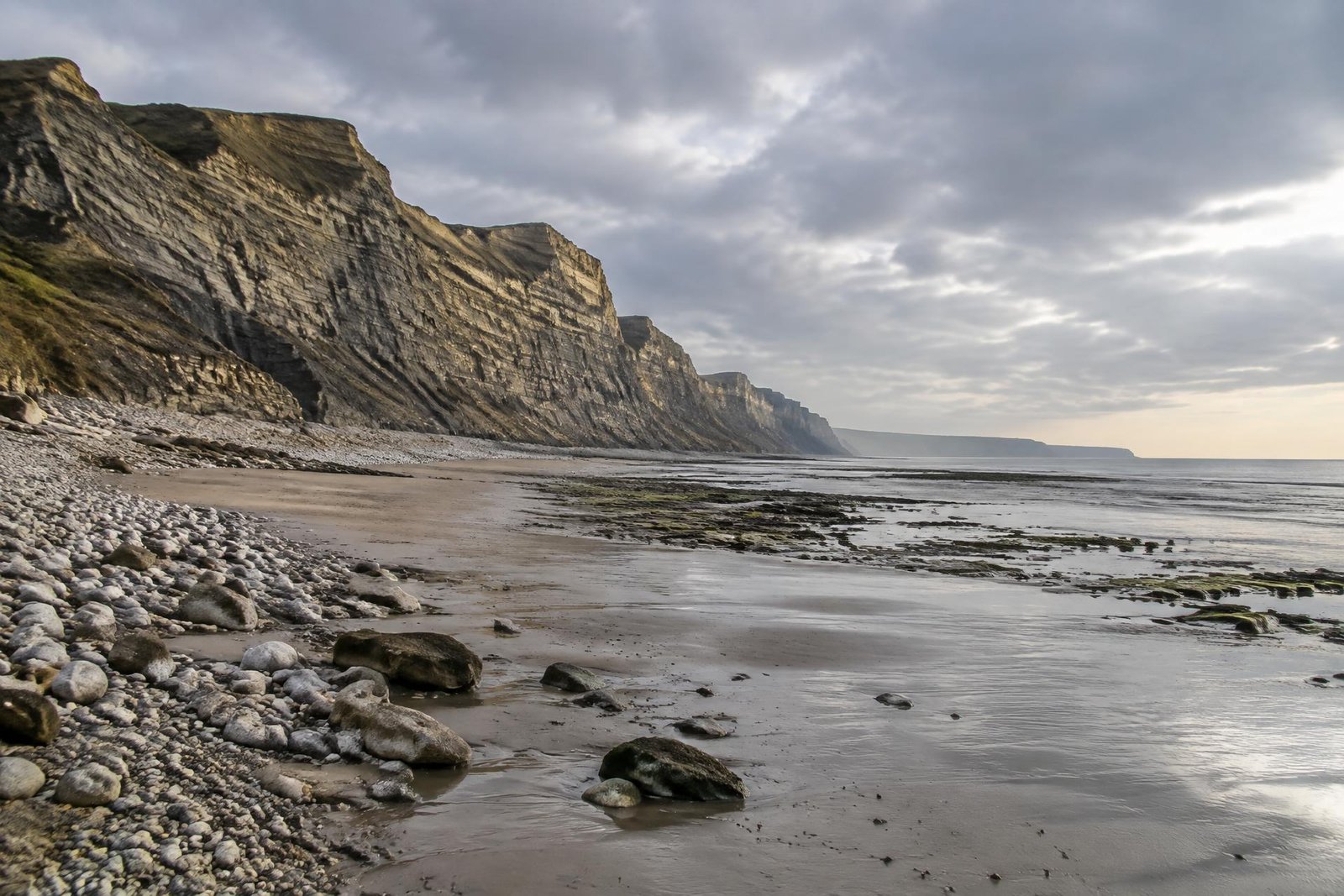
Representative photography of this stretch of coast, not a photograph of the site on a particular day.
What can you find?
- AmmonitesCoiled shells of extinct marine molluscs, the classic British fossil.Identify →
- BelemnitesBullet-shaped internal guards of squid-like Jurassic and Cretaceous animals.Identify →
- BivalvesFossil shellfish with two matching valves, common on most marine sites.Identify →
- Marine reptile remainsIchthyosaur and plesiosaur vertebrae, teeth and bone fragments.Identify →
About the site
Kilve is one of the most striking foreshores in Britain: flat, wave-cut ledges of Blue Lias limestone and shale, folded and fractured, with large ammonites visible in the rock surface. It is a classic teaching locality and a fine place simply to look.
Collecting is limited to loose material — the ammonites in the ledges must be left where they are, both because they are the reason the site matters and because the beach is a Site of Special Scientific Interest.
Loose belemnites, small ammonites and bivalves can be found in the shingle and in fallen blocks, especially after winter storms.
Planning a visit
- Geological period
- Early Jurassic (Blue Lias), around 200–195 million years old
- Difficulty
- Moderate
- Suitable for children
- Yes, with supervision and attention to the tide and cliffs.
- Best time to go
- Low tide, which exposes the full extent of the ledges. Winter after storms for loose material.
- Tides
- The Bristol Channel has a very large tidal range and the tide comes in quickly across flat ground. Consult a tide table and leave a wide margin.
- Access
- Level track from the car park to the beach, then rough rocky foreshore.
- Parking
- Pay and display car park at Kilve beach.
- Walking and terrain
- About 500 m level walk from car park to foreshore.
- Location type
- Beach, Geological site
- Collecting
- Kilve is an SSSI. Do not hammer the ledges or the in-situ ammonites. Loose material on the foreshore only.
Safety
- The Bristol Channel tide rises fast over flat ledges — this is the main hazard here.
- Wet ledges are very slippery.
- Cliffs are unstable; stay away from the base.
What to bring
- Boots with good grip
- Tide table
- Camera