Devon · Devon
Fossil hunting at Beer Beach
Chalk cliffs and shingle in East Devon, with flint echinoids, sponges and belemnites.
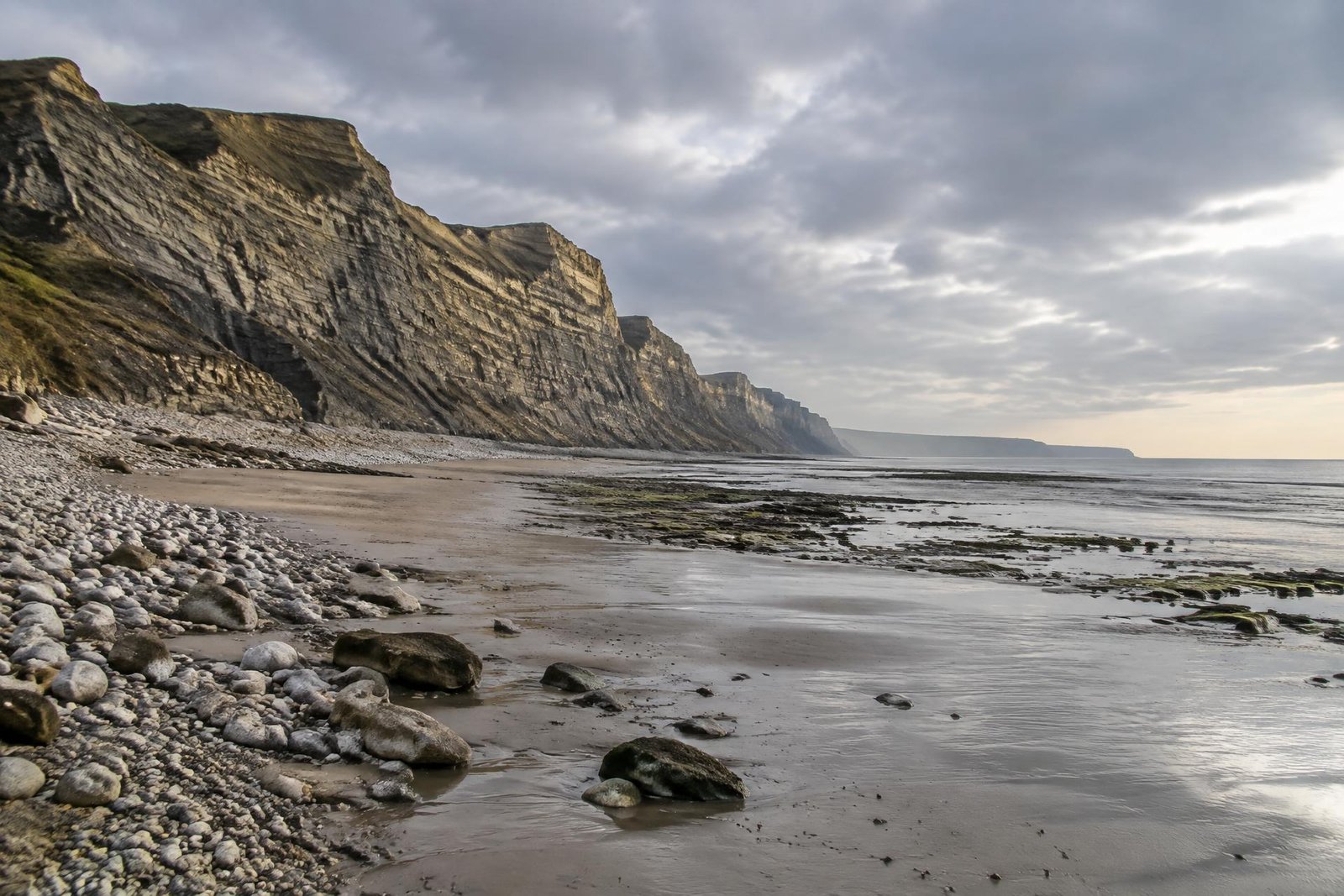
Representative photography of this stretch of coast, not a photograph of the site on a particular day.
What can you find?
- Sea urchinsEchinoids preserved in chalk and limestone, from dome-shaped to heart-shaped.Identify →
- BelemnitesBullet-shaped internal guards of squid-like Jurassic and Cretaceous animals.Identify →
- BivalvesFossil shellfish with two matching valves, common on most marine sites.Identify →
- BrachiopodsTwo-shelled marine animals, abundant in limestone and chalk.Identify →
About the site
Beer sits in a sheltered chalk cove at the western end of the Jurassic Coast. The Cretaceous chalk here produces flint-preserved sea urchins and sponges, together with belemnites and bivalves, which weather out of the cliffs and collect in the shingle.
Flint echinoids are the prize. They survive in the shingle long after the chalk has dissolved, so a slow search along the strandline is more productive than working near the cliffs.
Planning a visit
- Geological period
- Late Cretaceous (Chalk Group), around 95–85 million years old
- Difficulty
- Easy
- Suitable for children
- Yes, with supervision and attention to the tide and cliffs.
- Best time to go
- After winter storms when the shingle has been turned over.
- Tides
- Go out on a falling tide and turn back well before low water. Check a local tide table on the day and allow time to return.
- Access
- The beach is reached by a short slope from the village; the surface is steep shingle.
- Parking
- Pay and display car park above the beach in Beer village.
- Walking and terrain
- A few minutes from the car park.
- Location type
- Beach, Cliff
- Collecting
- Collect loose material from the beach. Do not hammer the chalk cliffs, which are protected and dangerous.
Safety
- Chalk cliffs shed rock without warning — keep well back.
- Steep shingle shelves into deep water.
What to bring
- Boots
- Hand lens
- Bag for finds
Nearby fossil locations
- 01BranscombeDevon · DevonSea urchins · Bivalves · Brachiopods · BelemnitesEasyFamily friendlyBeach, CliffExplore location →
- 02Lyme RegisDorset · DorsetAmmonites · Belemnites · Bivalves · Marine reptile remainsBeginnerFamily friendlyBeach, CliffExplore location →
- 03CharmouthDorset · DorsetAmmonites · Belemnites · Bivalves · Fossilised woodBeginnerFamily friendlyBeach, CliffExplore location →