Devon · Devon
Fossil hunting at Branscombe
Long East Devon shingle beach beneath chalk and greensand, with echinoids and bivalves.
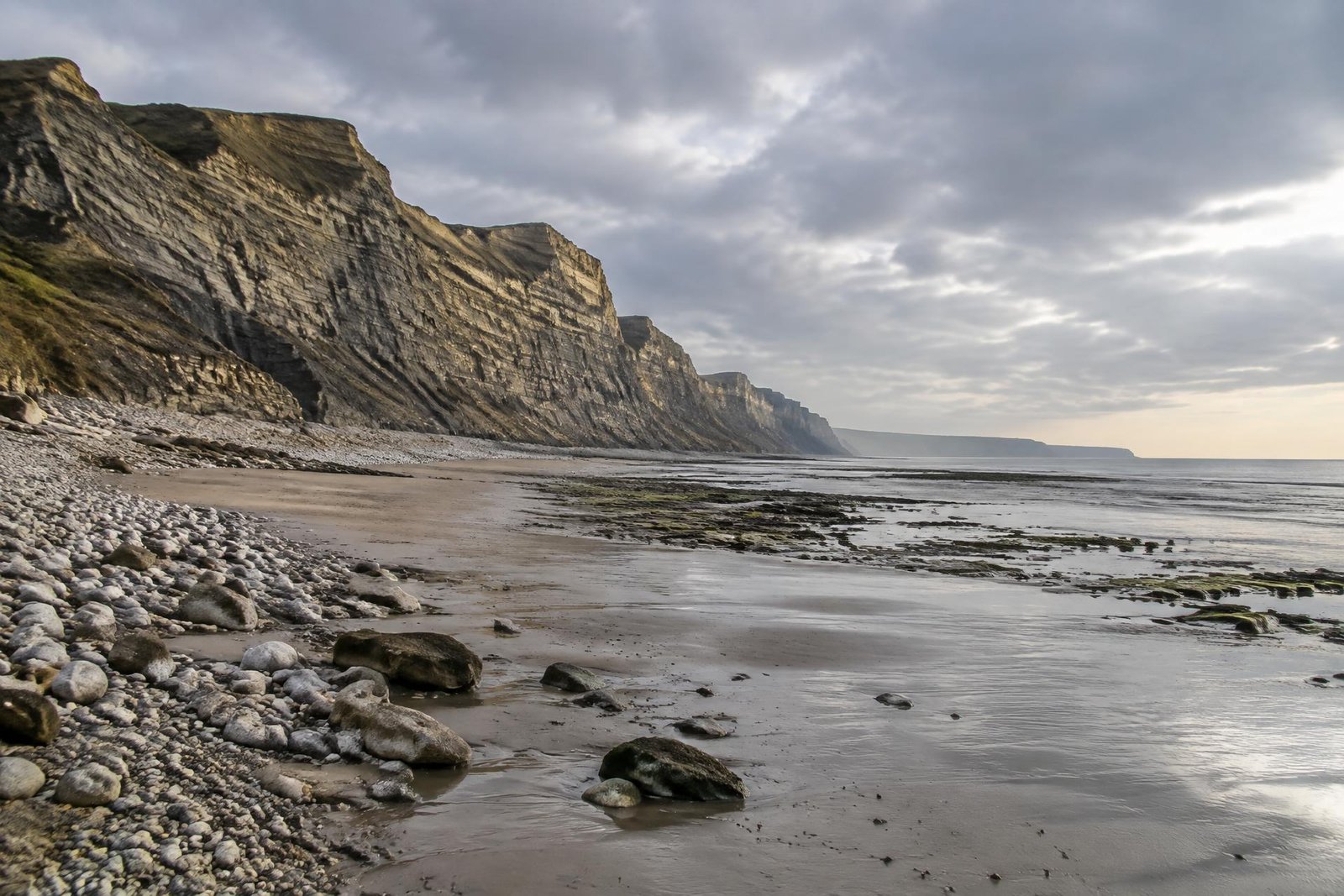
Representative photography of this stretch of coast, not a photograph of the site on a particular day.
What can you find?
- Sea urchinsEchinoids preserved in chalk and limestone, from dome-shaped to heart-shaped.Identify →
- BivalvesFossil shellfish with two matching valves, common on most marine sites.Identify →
- BrachiopodsTwo-shelled marine animals, abundant in limestone and chalk.Identify →
- BelemnitesBullet-shaped internal guards of squid-like Jurassic and Cretaceous animals.Identify →
About the site
Branscombe Mouth is a quiet shingle beach backed by Cretaceous chalk and Upper Greensand over Triassic red beds. The mix produces flint sea urchins, bivalves and occasional brachiopods, and the walk east towards Beer passes some of the most varied cliff geology in Devon.
It is an excellent family beach with a café at the beach car park, and the collecting is casual surface searching rather than serious excavation.
Planning a visit
- Geological period
- Cretaceous Chalk and Greensand over Triassic Mercia Mudstone
- Difficulty
- Easy
- Suitable for children
- Yes, with supervision and attention to the tide and cliffs.
- Best time to go
- Winter and spring after storms.
- Tides
- Go out on a falling tide and turn back well before low water. Check a local tide table on the day and allow time to return.
- Access
- Level access from the beach car park to the shingle; the shingle itself is hard going.
- Parking
- Pay and display car park at Branscombe Mouth.
- Walking and terrain
- Beach immediately adjacent; 2 km east along the coast to Beer.
- Location type
- Beach, Cliff
- Collecting
- Loose beach material only. Much of the coast here is National Trust and World Heritage land.
Safety
- Landslipped and unstable cliffs — keep clear.
- Check tides before walking east.
What to bring
- Boots
- Bag
- Tide table