Hampshire · Hampshire
Fossil hunting at Barton on Sea
Eocene clays rich in shells and shark teeth, on the Hampshire coast near New Milton.
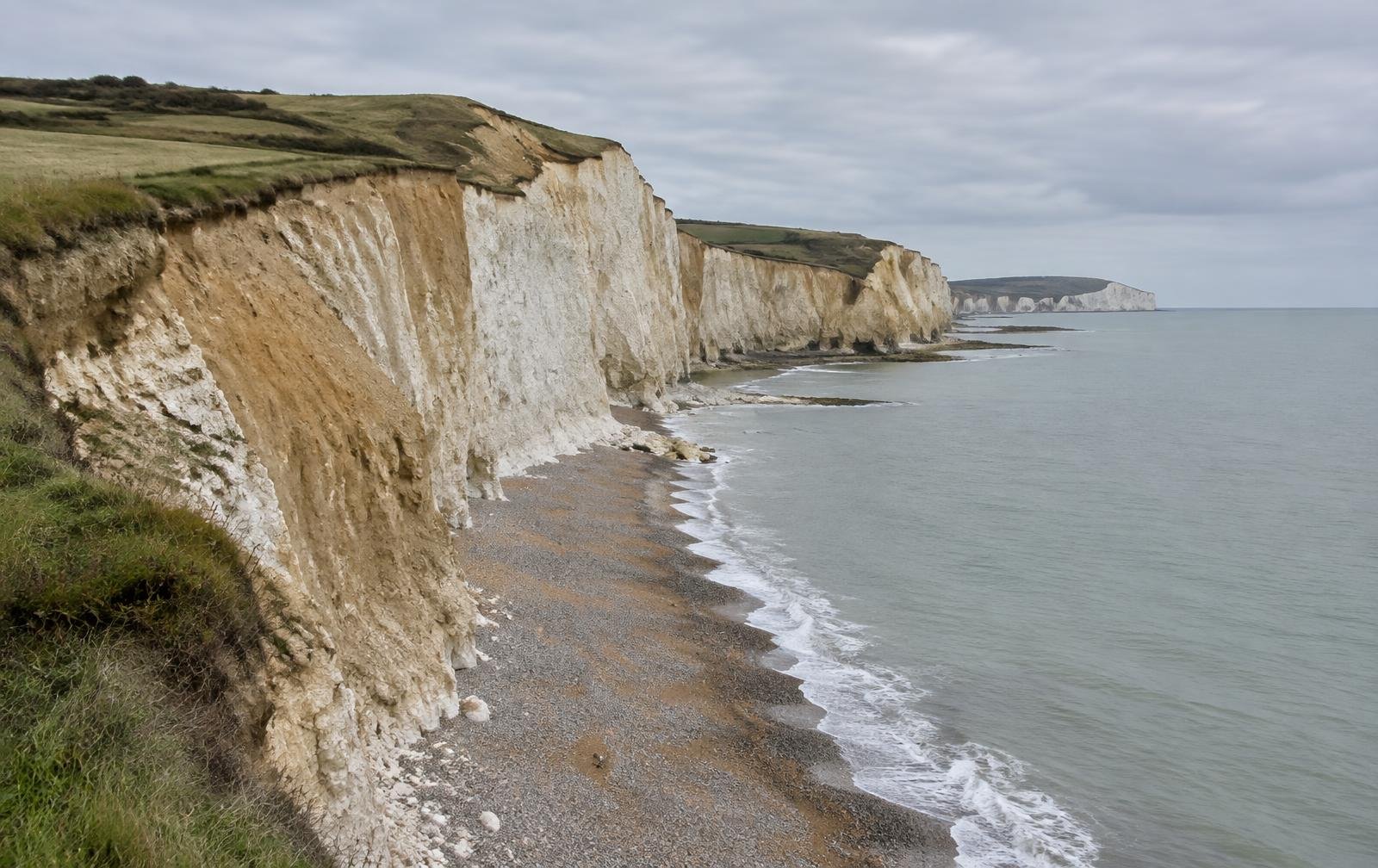
Representative photography of this stretch of coast, not a photograph of the site on a particular day.
What can you find?
- Shark teethSmall, glossy, triangular teeth weathered out of Eocene and Pliocene beds.Identify →
- GastropodsFossil snails, coiled into a cone rather than a flat spiral.Identify →
- BivalvesFossil shellfish with two matching valves, common on most marine sites.Identify →
- CoralsColonial and solitary corals preserved in limestone.Identify →
About the site
Barton on Sea is one of the best sites in Britain for Eocene marine fossils. The Barton Clay in the cliffs weathers out onto the beach, releasing hundreds of species of shells along with shark teeth, ray plates and fish material.
The material is small, so the technique is to search the fine shingle and the clay runnels carefully, or to sieve. A single patient hour close to the ground usually beats a long walk.
Planning a visit
- Geological period
- Eocene (Barton Clay), around 40 million years old
- Difficulty
- Easy
- Suitable for children
- Yes, with supervision and attention to the tide and cliffs.
- Best time to go
- After winter storms, when fresh clay has slumped onto the beach.
- Tides
- A falling tide gives the widest beach and the freshest washed material.
- Access
- Cliff-top paths are level and surfaced; beach access is by steep ramps and steps.
- Parking
- Pay and display car parks along the cliff top at Barton on Sea.
- Walking and terrain
- 200–400 m including a steep descent.
- Location type
- Beach, Cliff
- Collecting
- Collect from the beach and foreshore. Do not dig into the cliffs — they are unstable and coastal defences are in place along parts of the frontage.
Safety
- The cliffs are actively slipping and mud can be deep and sticky.
- Keep away from the cliff base and from any overhanging clay.
What to bring
- A small sieve
- Kneeling mat
- Boots or wellies
- Small pots for delicate teeth