West Sussex · Sussex
Fossil hunting at Bracklesham Bay
A shallow West Sussex beach where Eocene shark teeth wash out of the foreshore clay.
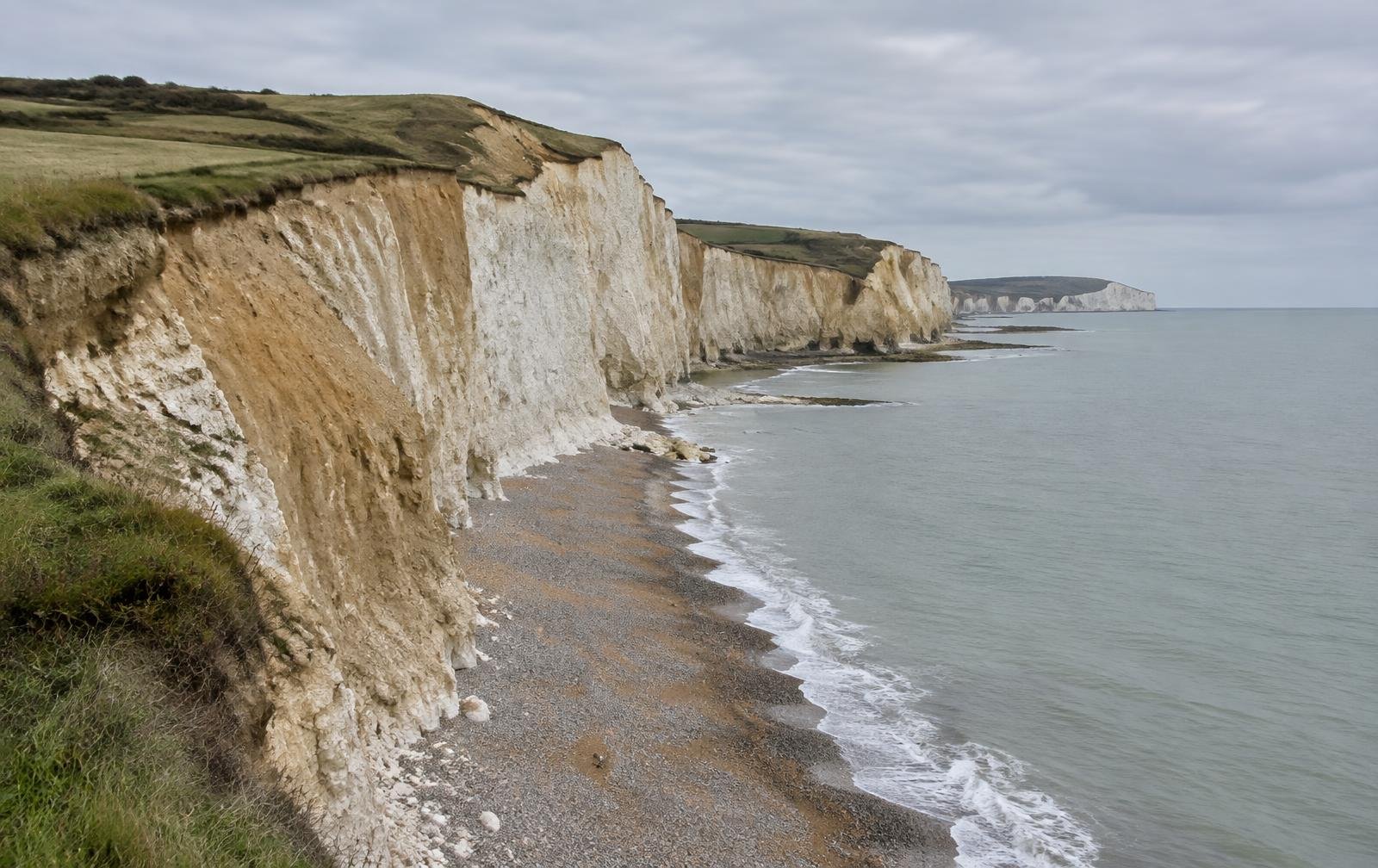
Representative photography of this stretch of coast, not a photograph of the site on a particular day.
What can you find?
- Shark teethSmall, glossy, triangular teeth weathered out of Eocene and Pliocene beds.Identify →
- GastropodsFossil snails, coiled into a cone rather than a flat spiral.Identify →
- BivalvesFossil shellfish with two matching valves, common on most marine sites.Identify →
- CoralsColonial and solitary corals preserved in limestone.Identify →
About the site
Bracklesham Bay is a long, shallow beach where Eocene Bracklesham Group sands and clays are exposed on the foreshore rather than in cliffs. Shark teeth, rays' teeth, shells and the coin-shaped foraminifera called Nummulites are washed out and concentrated in the shingle.
Because there are no cliffs, this is one of the safest fossil sites in southern England and an excellent place to take children. Bring a sieve: the finds are small and the reward comes from working the shell beds patiently.
Planning a visit
- Geological period
- Eocene (Bracklesham Group), around 45 million years old
- Difficulty
- Easy
- Suitable for children
- Yes, with supervision and attention to the tide and cliffs.
- Best time to go
- Low tide after storms, when fresh shell beds are exposed.
- Tides
- The best ground is exposed only around low water. Check the tide before setting out.
- Access
- Level access from the car park to the beach, which is shingle over sand.
- Parking
- Car parks at Bracklesham and East Wittering.
- Walking and terrain
- Beach immediately adjacent to the parking.
- Location type
- Beach
- Collecting
- Surface collecting from the beach only; do not dig the foreshore beds.
Safety
- No cliffs, so the risks are low.
- The foreshore clay can be slippery.
- Watch for a returning tide over flat ground.
What to bring
- A sieve with a 3–5 mm mesh
- Wellies
- Kneeling mat
- Small pots