Isle of Wight · Isle of Wight
Fossil hunting at Yaverland, Sandown
Wealden cliffs on Sandown Bay, close to the Dinosaur Isle museum.
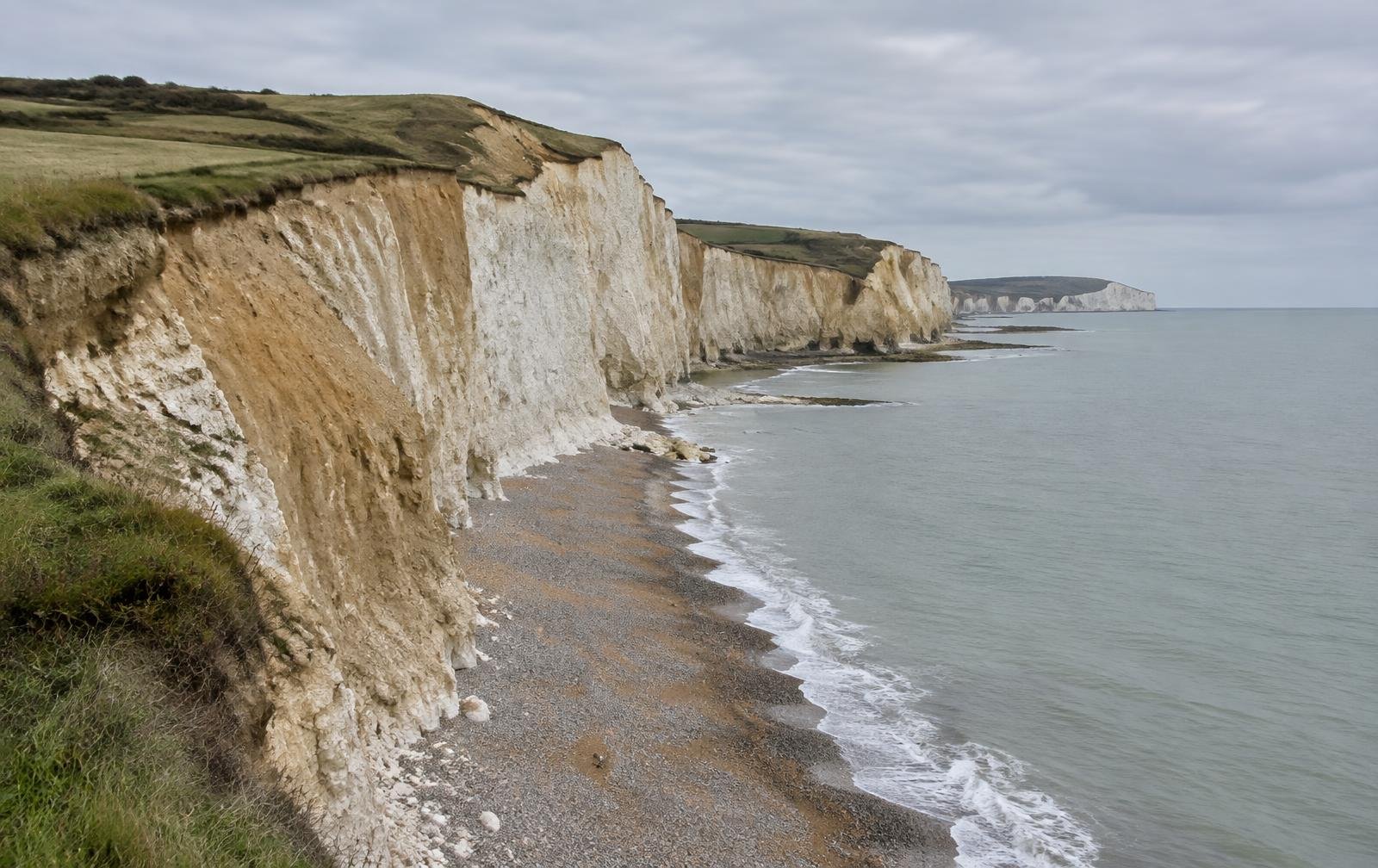
Representative photography of this stretch of coast, not a photograph of the site on a particular day.
What can you find?
- Dinosaur fossilsBone fragments and footprint casts, chiefly from the Isle of Wight's Wealden beds.Identify →
- Fossilised woodDriftwood and tree remains replaced by minerals, sometimes as jet or lignite.Identify →
- Plant fossilsLeaf, frond and stem impressions, mostly in Carboniferous shales.Identify →
- BivalvesFossil shellfish with two matching valves, common on most marine sites.Identify →
About the site
Yaverland sits at the northern end of Sandown Bay, where Wealden clays and sandstones are exposed in the cliffs. Bone fragments, fossil wood and plant material are found on the beach, and the Dinosaur Isle museum is a short walk along the seafront.
The combination of a safe sandy beach, a museum and genuine dinosaur-bearing geology makes this the most family-friendly fossil stop on the island.
Planning a visit
- Geological period
- Early Cretaceous (Wealden Group), around 130–125 million years old
- Difficulty
- Easy
- Suitable for children
- Yes, with supervision and attention to the tide and cliffs.
- Best time to go
- Low tide, particularly after storms.
- Tides
- Work a falling tide; the cliff base is cut off at high water in places.
- Access
- Level promenade access and a slipway to the sand; among the more accessible fossil beaches in Britain.
- Parking
- Car park at Yaverland beach.
- Walking and terrain
- Beach immediately adjacent to the car park.
- Location type
- Beach, Cliff
- Collecting
- Loose material only. Dinosaur Isle staff will identify and record finds.
Safety
- Cliff falls are common — stay clear of the base.
- Check the tide before walking towards Culver.
What to bring
- Boots or wellies
- Bag
- Tide table