North Yorkshire · Yorkshire and the North East coast
Fossil hunting at Robin Hood's Bay
Wide Jurassic wave-cut scars with ammonites in the rock and loose material in the shingle.
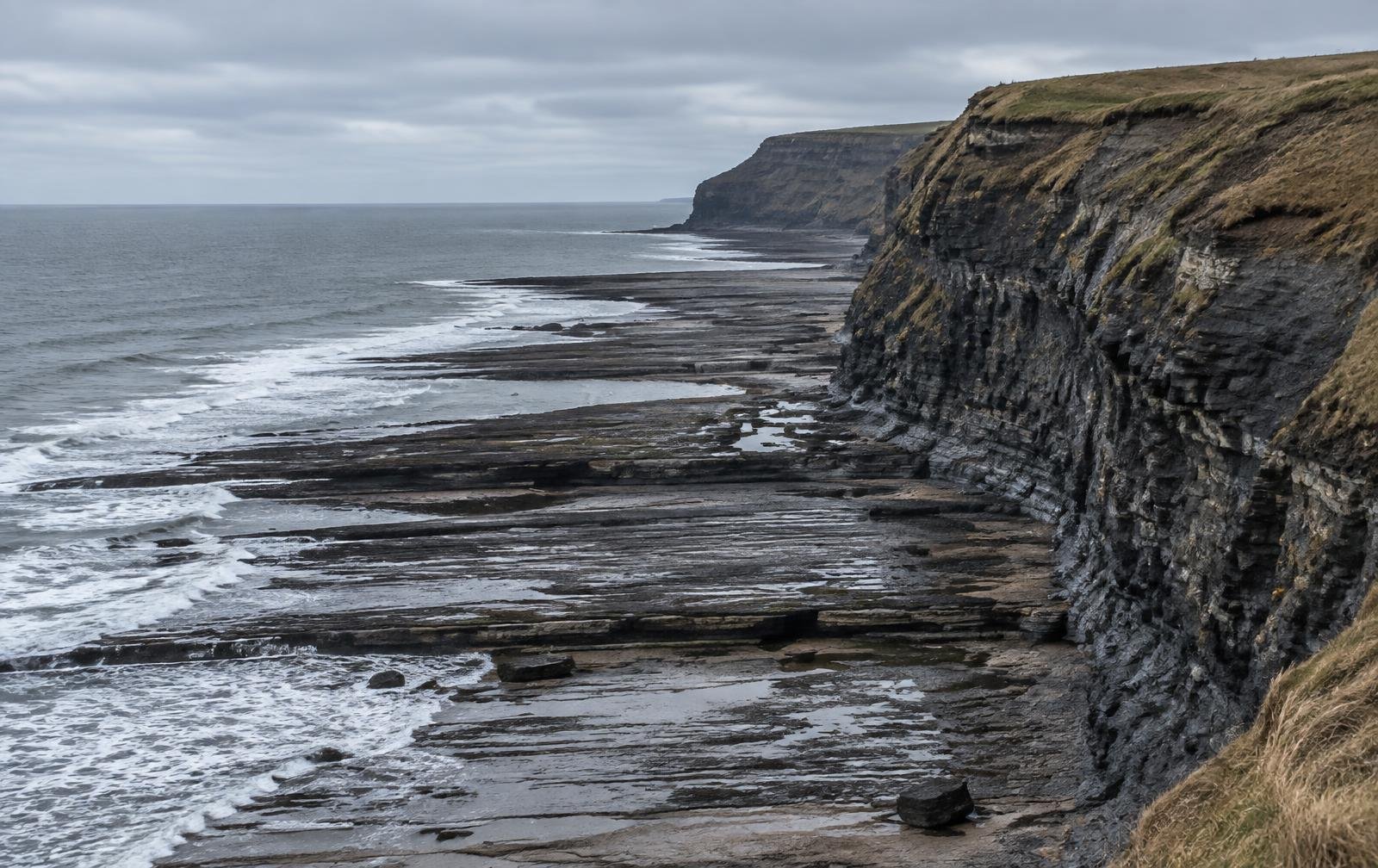
Representative photography of this stretch of coast, not a photograph of the site on a particular day.
What can you find?
- AmmonitesCoiled shells of extinct marine molluscs, the classic British fossil.Identify →
- BelemnitesBullet-shaped internal guards of squid-like Jurassic and Cretaceous animals.Identify →
- BivalvesFossil shellfish with two matching valves, common on most marine sites.Identify →
- CrinoidsSea lilies, usually found as circular stem segments in limestone.Identify →
- Fossilised woodDriftwood and tree remains replaced by minerals, sometimes as jet or lignite.Identify →
About the site
Robin Hood's Bay is a broad bay south of Whitby where low tide exposes a vast area of rock scars arranged in curving ribs. Ammonites are visible in the scars, and loose ammonites, belemnites and bivalves are found in the shingle and boulders.
The bay is a Site of Special Scientific Interest and a much-used teaching site. Fossils in the scars should be left in place; there is plenty of loose material to search.
The village itself is steep and narrow, with parking at the top of the hill and a walk down.
Planning a visit
- Geological period
- Early Jurassic (Redcar Mudstone Formation), around 195–185 million years old
- Difficulty
- Easy
- Suitable for children
- Yes, with supervision and attention to the tide and cliffs.
- Best time to go
- Low tide, which exposes the scars. Winter after storms for fresh material.
- Tides
- The scars are covered at high water and the tide floods across them quickly. Go out on a falling tide only.
- Access
- Very steep village street down to the slipway; difficult for limited mobility.
- Parking
- Pay and display car park at the top of the village.
- Walking and terrain
- About 800 m downhill from the car park to the slipway.
- Location type
- Beach, Geological site
- Collecting
- SSSI. Do not hammer the scars or in-situ ammonites; collect loose material only.
Safety
- The scars are slippery with weed and the tide returns fast across flat ground.
- Cliffs are unstable; keep away from the base.
What to bring
- Boots with grip
- Tide table
- Bag
Nearby fossil locations
- 01WhitbyNorth Yorkshire · Yorkshire and the North East coastAmmonites · Belemnites · Jet · BivalvesEasyFamily friendlyBeach, CliffExplore location →
- 02Filey BriggNorth Yorkshire · Yorkshire and the North East coastBrachiopods · Bivalves · Corals · Sea urchinsModerateFamily friendlyBeach, Geological siteExplore location →
- 03StaithesNorth Yorkshire · Yorkshire and the North East coastAmmonites · Belemnites · Bivalves · BrachiopodsModerateBeach, CliffExplore location →