North Yorkshire · Yorkshire and the North East coast
Fossil hunting at Filey Brigg
A long rocky promontory of Middle Jurassic rock with brachiopods, bivalves and corals at low tide.
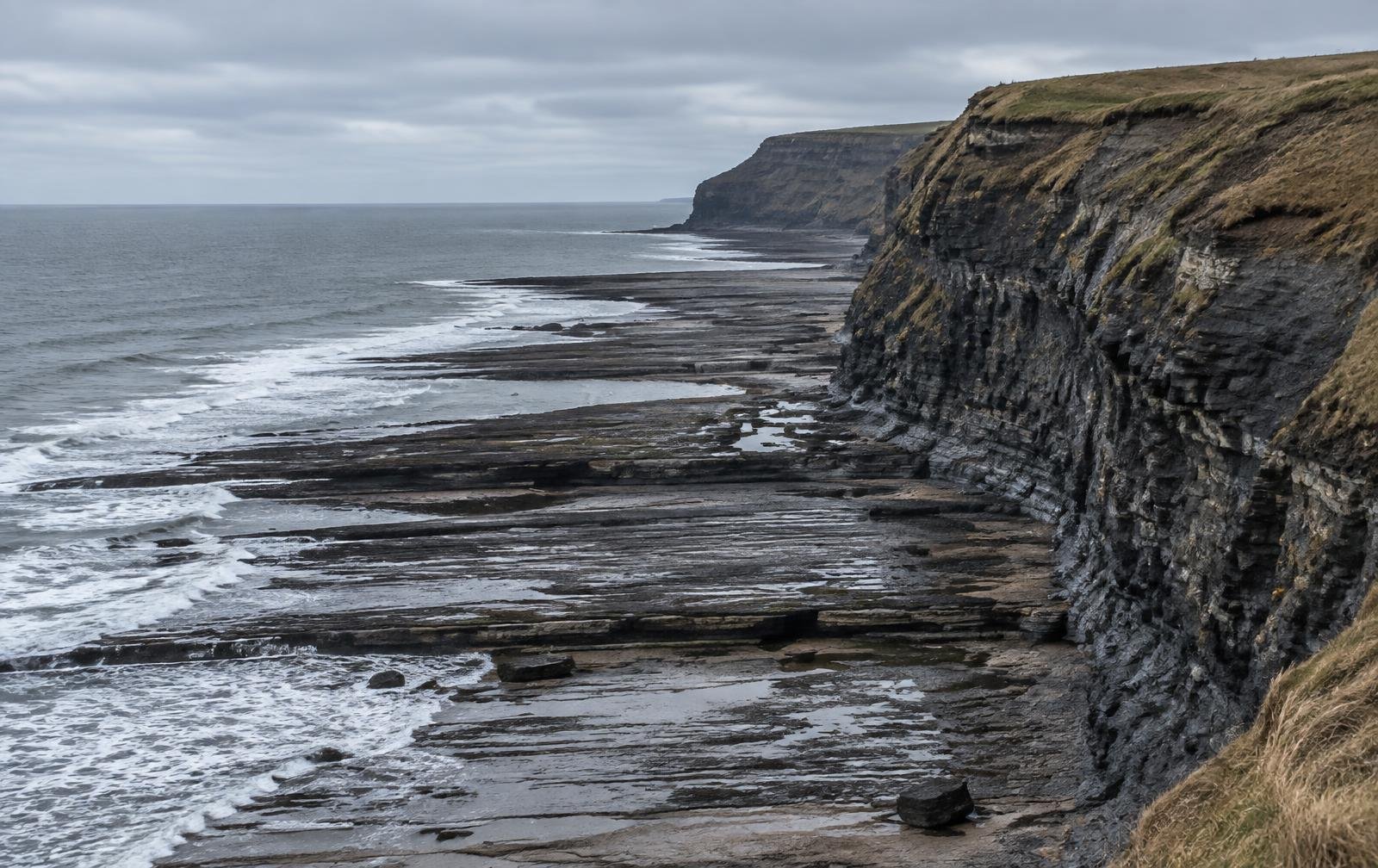
Representative photography of this stretch of coast, not a photograph of the site on a particular day.
What can you find?
- BrachiopodsTwo-shelled marine animals, abundant in limestone and chalk.Identify →
- BivalvesFossil shellfish with two matching valves, common on most marine sites.Identify →
- CoralsColonial and solitary corals preserved in limestone.Identify →
- Sea urchinsEchinoids preserved in chalk and limestone, from dome-shaped to heart-shaped.Identify →
- GastropodsFossil snails, coiled into a cone rather than a flat spiral.Identify →
About the site
Filey Brigg is a natural rock promontory running out into the sea at the north end of Filey Bay. The Middle Jurassic Corallian rocks contain brachiopods, bivalves, corals and echinoid fragments, and the Brigg itself is a fine piece of coastal geology.
The Brigg is only safely accessible around low tide, and the tide floods both sides of it. It is a Site of Special Scientific Interest, so observation and loose material are the order of the day.
Planning a visit
- Geological period
- Middle to Late Jurassic (Corallian Group), around 165–155 million years old
- Difficulty
- Moderate
- Suitable for children
- Yes, with supervision and attention to the tide and cliffs.
- Best time to go
- Low tide in calm conditions.
- Tides
- The Brigg is surrounded by water on a rising tide and people are cut off here regularly. Only walk out on a falling tide.
- Access
- Cliff-top path is walkable; the Brigg itself is rough, slippery rock.
- Parking
- Country park car park at Filey Brigg, and car parks in Filey.
- Walking and terrain
- About 1 km from the country park car park to the Brigg.
- Location type
- Beach, Geological site
- Collecting
- SSSI. Do not hammer the Brigg; look at weathered surfaces and loose material.
Safety
- Being cut off on the Brigg is the classic accident here — watch the tide constantly.
- Wet rock and weed are extremely slippery.
- Cliffs behind the beach are unstable.
What to bring
- Boots with strong grip
- Tide table
- Hand lens
Nearby fossil locations
- 01Robin Hood's BayNorth Yorkshire · Yorkshire and the North East coastAmmonites · Belemnites · Bivalves · CrinoidsEasyFamily friendlyBeach, Geological siteExplore location →
- 02WhitbyNorth Yorkshire · Yorkshire and the North East coastAmmonites · Belemnites · Jet · BivalvesEasyFamily friendlyBeach, CliffExplore location →