South Gloucestershire · Gloucestershire and the Severn
Fossil hunting at Aust Cliff
The classic Rhaetic bone bed locality on the Severn, beneath the old Severn Bridge.
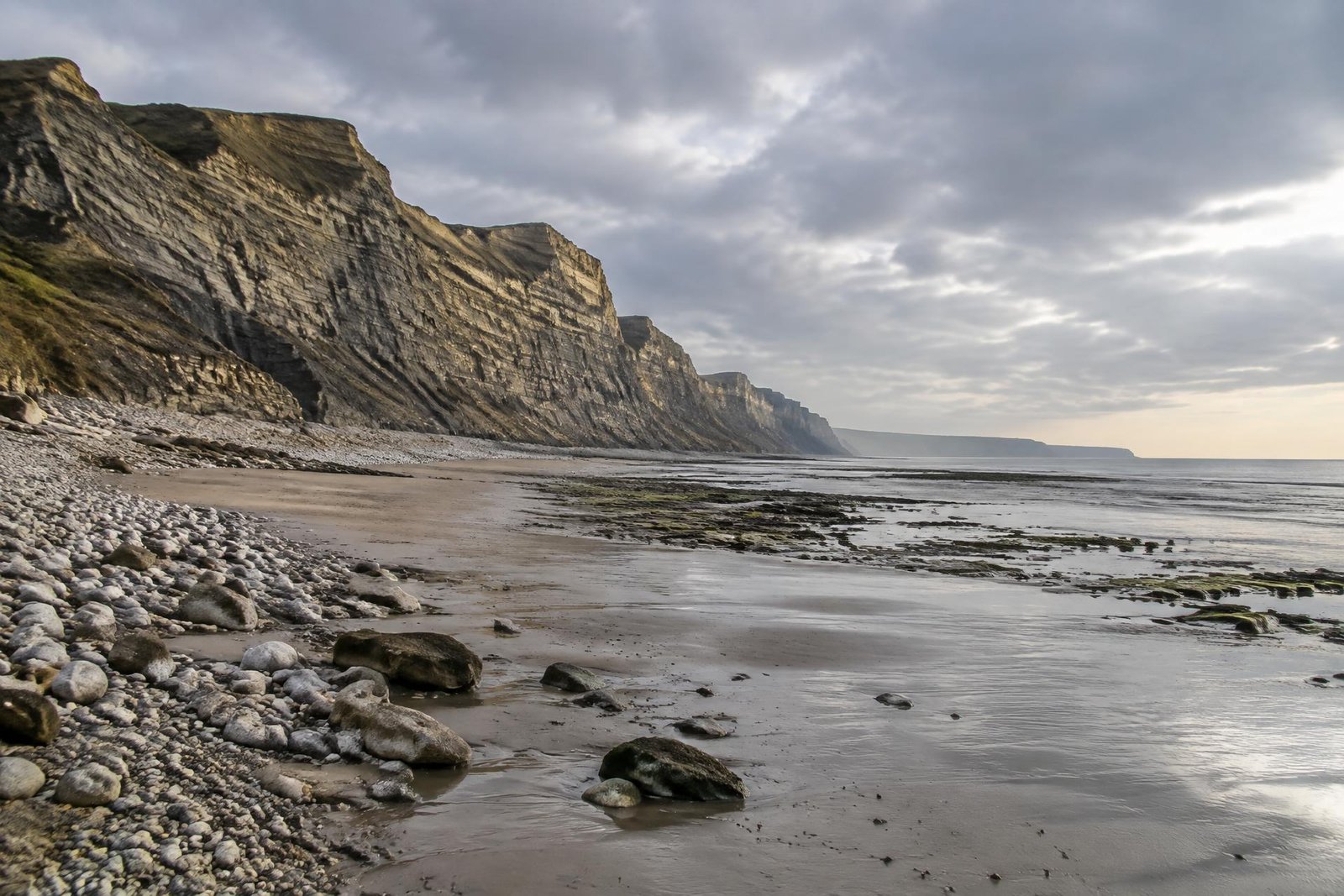
Representative photography of this stretch of coast, not a photograph of the site on a particular day.
What can you find?
About the site
Aust Cliff is one of the most important Triassic sites in Britain. Red Mercia Mudstone is capped by the Penarth Group, including the Rhaetic bone bed — a thin layer crowded with fish teeth, scales and bone fragments.
The cliff is a Site of Special Scientific Interest and is dangerous: it is high, unstable and undercut by an estuary with one of the largest tidal ranges in the world. It is best treated as a place to observe, with collecting restricted to small loose fragments on the foreshore.
Planning a visit
- Geological period
- Late Triassic (Mercia Mudstone and Penarth Groups), around 205–201 million years old
- Difficulty
- Experienced
- Suitable for children
- Not recommended for young children at this site.
- Best time to go
- Low tide only, in settled weather.
- Tides
- The Severn Estuary has the second largest tidal range in the world and dangerous currents. Only visit around low water and never linger.
- Access
- Rough ground and a steep descent. Not suitable for children or anyone with limited mobility.
- Parking
- Limited parking at Aust village near the old bridge.
- Walking and terrain
- Short but rough walk to the foreshore.
- Location type
- Cliff, Geological site
- Collecting
- SSSI. Hammering the cliff is not permitted. Loose fragments from the foreshore only.
Check before you travel: Access and conditions at Aust change with erosion and estuary works — check locally before visiting.
Safety
- Severe rockfall risk from a high, unstable cliff — do not stand beneath it.
- Extremely fast tides and deep estuary mud.
- This is not a beginner's site.
What to bring
- Hard hat
- Boots
- Tide table
- A companion — do not visit alone
Nearby fossil locations
- 01PenarthVale of Glamorgan · WalesBivalves · Shark teeth · Ammonites · BrachiopodsModerateFamily friendlyBeach, Cliff, Geological siteExplore location →
- 02Kilve BeachSomerset · SomersetAmmonites · Belemnites · Bivalves · Marine reptile remainsModerateFamily friendlyBeach, Geological siteExplore location →