Kent · Kent
Fossil hunting at Warden Point, Isle of Sheppey
The classic London Clay site, famous for pyritised fruits, crabs and shark teeth.
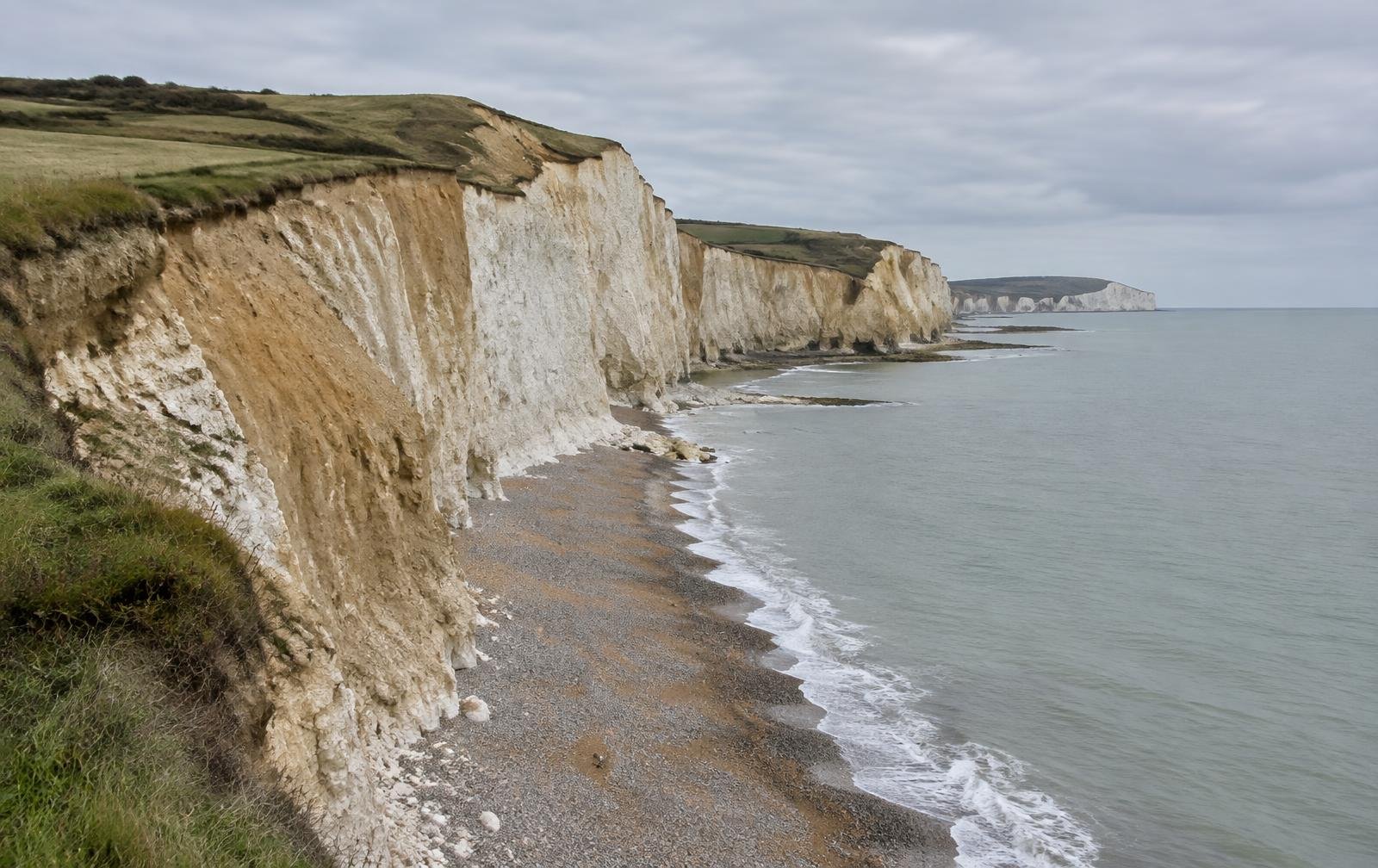
Representative photography of this stretch of coast, not a photograph of the site on a particular day.
What can you find?
- Shark teethSmall, glossy, triangular teeth weathered out of Eocene and Pliocene beds.Identify →
- Fossilised woodDriftwood and tree remains replaced by minerals, sometimes as jet or lignite.Identify →
- Plant fossilsLeaf, frond and stem impressions, mostly in Carboniferous shales.Identify →
- GastropodsFossil snails, coiled into a cone rather than a flat spiral.Identify →
- BivalvesFossil shellfish with two matching valves, common on most marine sites.Identify →
About the site
The north coast of the Isle of Sheppey is the best-known London Clay locality in the country. The cliffs shed clay continuously, and the foreshore yields pyritised seeds and fruits, crabs and lobsters in nodules, shark teeth and fish remains.
Pyritised material needs care once home: kept damp or in humid conditions it breaks down. Dry specimens slowly and store them somewhere dry.
The cliffs are unstable and the mud can be treacherous. Keep to the foreshore and respect the tide.
Planning a visit
- Geological period
- Eocene (London Clay), around 54–50 million years old
- Difficulty
- Moderate
- Suitable for children
- Not recommended for young children at this site.
- Best time to go
- Winter, after storms and cliff slumping.
- Tides
- Go on a falling tide. Sections of the foreshore below the cliffs are cut off at high water.
- Access
- Rough foreshore, deep mud in places; not suitable for limited mobility or young children.
- Parking
- Parking at Leysdown or nearby holiday parks, then a walk along the coast.
- Walking and terrain
- 1–2 km along the foreshore, over mud and shingle.
- Location type
- Beach, Cliff
- Collecting
- Collect loose material from the foreshore. Digging into the cliffs is dangerous and not acceptable.
Safety
- Soft clay cliffs collapse frequently and without warning — stay well away from the base.
- Deep, sticky mud; boots can be lost in it.
- Tidal cut-off is a real risk here.
What to bring
- Wellington boots
- Tide table
- Rigid containers
- Phone and a companion