Kent · Kent
Fossil hunting at Folkestone Warren
Gault Clay and Greensand beneath the chalk, with well-preserved ammonites and shells.
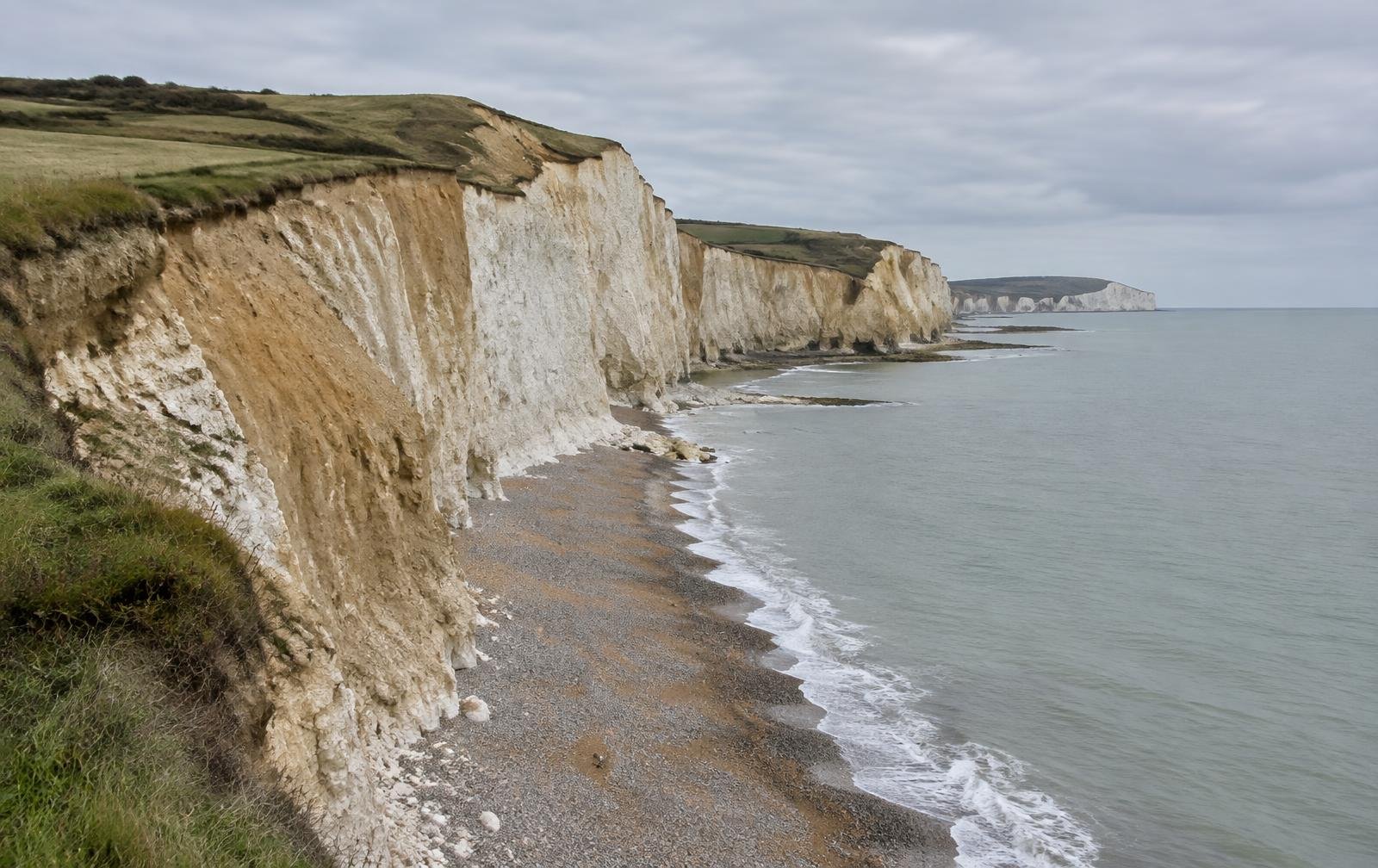
Representative photography of this stretch of coast, not a photograph of the site on a particular day.
What can you find?
- AmmonitesCoiled shells of extinct marine molluscs, the classic British fossil.Identify →
- BivalvesFossil shellfish with two matching valves, common on most marine sites.Identify →
- GastropodsFossil snails, coiled into a cone rather than a flat spiral.Identify →
- BelemnitesBullet-shaped internal guards of squid-like Jurassic and Cretaceous animals.Identify →
- Sea urchinsEchinoids preserved in chalk and limestone, from dome-shaped to heart-shaped.Identify →
About the site
Folkestone Warren is a large landslip complex between Folkestone and Dover where the Gault Clay is exposed beneath the chalk. The Gault is famous for beautifully preserved ammonites, often with original shell, along with bivalves, gastropods and occasional fish and reptile remains.
Collecting concentrates on material weathering out of the clay on the foreshore. The site is an SSSI and the cliffs are unstable, so the cliff faces themselves should be left alone.
Planning a visit
- Geological period
- Early Cretaceous (Gault Clay and Lower Greensand), around 110–100 million years old
- Difficulty
- Moderate
- Suitable for children
- Not recommended for young children at this site.
- Best time to go
- Winter, after storms have washed the clay.
- Tides
- Only work a falling tide; the foreshore below the Warren is cut off at high water.
- Access
- Steep paths through the landslip and a rough foreshore. Not accessible for limited mobility.
- Parking
- Parking at Capel-le-Ferne or in Folkestone, then a walk down into the Warren.
- Walking and terrain
- 1 km or more, including steep descents.
- Location type
- Beach, Cliff, Geological site
- Collecting
- SSSI. Collect loose foreshore material only; do not hammer the cliffs or the in-situ Gault.
Check before you travel: Paths in and out of the Warren change as the landslip moves — check the current route locally.
Safety
- Active landslip with frequent movement and rockfall.
- Tidal cut-off risk along the foreshore.
- Railway land borders the site — keep out.
What to bring
- Boots
- Tide table
- Small pots for delicate ammonites
- A companion