Dorset · Dorset
Fossil hunting at Church Ope Cove, Portland
A sheltered cove on Portland below Jurassic limestone, with bivalves, gastropods and ammonites.
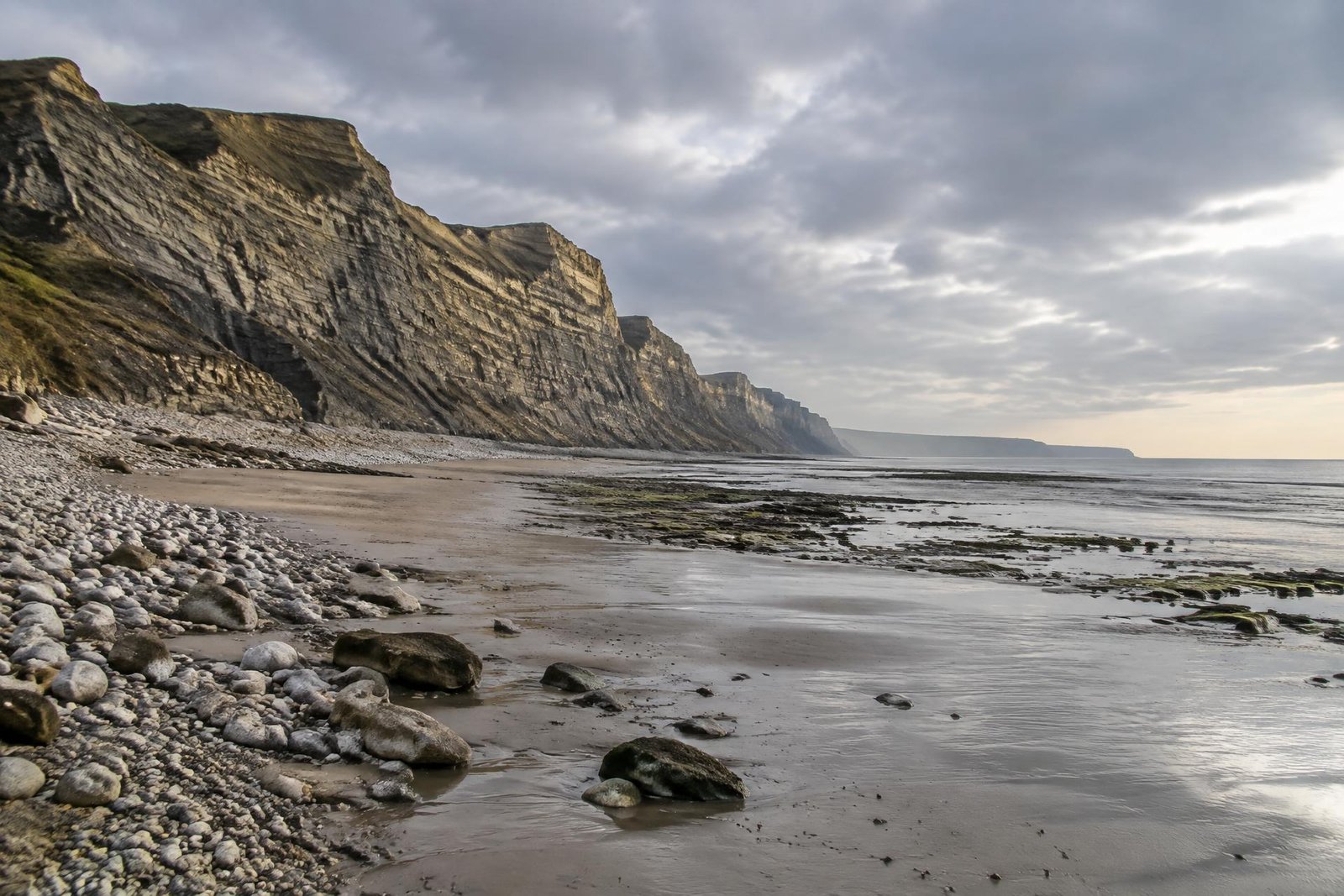
Representative photography of this stretch of coast, not a photograph of the site on a particular day.
What can you find?
- BivalvesFossil shellfish with two matching valves, common on most marine sites.Identify →
- GastropodsFossil snails, coiled into a cone rather than a flat spiral.Identify →
- AmmonitesCoiled shells of extinct marine molluscs, the classic British fossil.Identify →
- Fossilised woodDriftwood and tree remains replaced by minerals, sometimes as jet or lignite.Identify →
About the site
Portland is built of Late Jurassic limestone, quarried for centuries and full of marine fossils. Church Ope Cove, on the island's eastern side, gives access to fallen blocks and shingle where bivalves, gastropods and ammonite casts can be found.
The famous fossil forest horizon and the Portland quarries are of great geological interest, but many quarry sites require permission. The cove is the straightforward public option.
Planning a visit
- Geological period
- Late Jurassic (Portland and Purbeck Groups), around 150–145 million years old
- Difficulty
- Moderate
- Suitable for children
- Not recommended for young children at this site.
- Best time to go
- Any time of year; the cove is relatively sheltered.
- Tides
- The cove is small — check the tide so you have beach to work on.
- Access
- Access is by a long flight of steps down from the cliff top. Not accessible for wheelchairs or pushchairs.
- Parking
- On-street and small car parks near Portland Museum, then a walk.
- Walking and terrain
- About 400 m including a substantial stairway.
- Location type
- Beach, Cliff
- Collecting
- Quarries on Portland are working or private land; do not enter without permission. Collect loose beach material only.
Safety
- Steps can be slippery.
- Keep clear of the cliffs and any quarry faces.
- Rockfall is possible.
What to bring
- Boots
- Hand lens
- Bag for finds